
The travel industry is much more competitive than before, with travelers relying strongly on online applications to organize their journeys. Travel agencies need to preserve their growth and existence by embracing the potential of digital marketing.
Whether it is SEO-based content that reacts to organic searches or social media campaigns that instill wanderlust, digital marketing helps agencies reach potential travelers at the proper moment. The travel industry is more competitive than ever, with nearly 75% of travelers booking their trips online and 65% using mobile devices to plan and book their journeys.
A combination of online exposure, bespoke offers, and storytelling promises to reduce disaffection, enhance brand awareness, and win over quality customers. Digital promotion can not only increase the number of leads and conversions but also make travel agencies a credible place to build memorable travel experiences. That is why implementing Digital Marketing Strategies For Travel Agencies has become vital for long-term growth and success.
Why Digital Marketing Is Important to Travel Agencies?

One of the most searched items on the internet is travel. Users are always searching for holiday destinations, hotel discounts, flight tickets, and travel ideas online. Gone are the days when people walk into an agency and book their trips after researching via their devices.
This is why digital travel agency marketing is more crucial than ever:
Global Reach:
Digital media enable travel agencies to present services to the global audience. Unlike conventional ways, online marketing allows agencies to market to international tourists and sell exotic destinations and packages across borders. The international reach makes agencies reach across borders and have a wider range of clients.
Cost-Effective:
Online marketing is significantly cheaper compared to old approaches of advertising, such as newspapers, magazines, or television. Travel agents are able to do niche campaigns, monitor their budgets, and monitor their outcomes in real time. Digital ads, SEO, and social media do not cost heavily and enable agencies to access as many people as possible, making this an advantageous marketing strategy.
Personalization:
Digital marketing enables travel agencies to customize the campaigns to every customer. Agencies can base their offers on browsing habits and preferences and send reminders as final messages to close sales. This tailoring develops a personalized customer experience, which enhances engagement, satisfaction, and conversion probabilities, making travelers feel they are appreciated and understood.
Trust Building:
Trust becomes a key element in travel decisions. Agencies build credibility through reviews, testimonials, blogs, and an active social media presence. With real experiences and equally high engagement levels, potential customers are more likely to book with the agency. Trust is the reason that converts interested visitors into loyal and returning clients.
Higher Conversions:
Digital marketing will make sure that the agencies reach the appropriate audience at the appropriate times. Agencies use geotargeted ads, SEO, and retargeting to find individuals who actively seek travel options. This accuracy will lead to more bookings, increasing conversion rates compared to traditional marketing strategies, which are less measurable.
Suggested Read: How to start Dropshipping in Lucknow
Top Digital Marketing Strategies for Travel Agencies

Now, let’s explore the most effective digital marketing strategies for travel agencies in detail.
1. Create an Excellent Travel Site
The travel agency can use its website as the first point of contact. It is supposed to be professional, friendlier to mobile devices, and a place where users do not find it hard to find their way around. Inserting destination photographs, valuable factual package information, customer feedback, and basic booking information.
An efficient site attracts people and also turns them into customers. Make it irresistible to do business by clearly stating calls to action, such as “Book Now” or “Get a Quote,” on every page. This guarantees your would-be customers easy access to contacting you or making their reservation without any mix-ups.
2. Search Engine Optimization (SEO)
SEO will make your travel agency turn up higher on Google whenever traveling customers search their sites. Most of them type in such keywords as “budget trips Europe” or “honeymoon packages in Bali.” Getting found requires destination-based keywords, blogs containing travel FAQs, and building backlinks using trusted websites.
Studies show that 68% of online experiences begin with a search engine, and 75% of users never scroll past the first page.
Also, optimize your meta titles, descriptions, and images. SEO does not happen overnight, but with the right work, it will enhance the exposure of your site, receiving more visitors and conversions without having to spend much on advertisements.
3. Social Media Marketing
Social media motivates travellers each day. Instagram, Facebook, Pinterest, and TikTok allow you to promote destinations using beautiful photos and small videos. Posting client stories, travel tricks, or conducting contests makes it more engaging. Hashtags used specifically in destinations are good ways of reaching a greater number of people.
It is also a way of collaborating with influencers, which also increases visibility because their followers take recommendations seriously. Social media revolves around inspiration creation. Travelers will feel the excitement and be inclined to use your agency to book their next vacation adventure.
4. Content Marketing
Content marketing establishes trust and helps create the perception of your agency being a master of travel. Sharing helpful content is a simple gesture that will make a traveler value you before they book with you. Write destination blogs, top-10 lists, or make video travel guides. 70% of people prefer learning about companies through content rather than ads.
Share customer experiences with photos, or provide downloadable itineraries and e-books. Travelers will remember your agency when your content is informative and empowering. Rather than simply sell, you end up becoming a mentor they trust. This enhances the likelihood of their booking your services with more confidence.
5. Email Marketing
Email marketing is inexpensive and efficient with the old and prospective customers. Get the email addresses of customers and post travel offers, new packages, or seasonal offers. You may also send personal recommendations, such as honeymoon tips or family vacation ideas. The average return on investment (ROI) from email marketing is really $36 for every $1 invested.
Email newsletters ensure that your agency is on the minds of clients. Emails invite repeat bookings given the value offered, say travel tips. When it is segmented well, one travel group will be served with content that revolves around their interests and travel necessities.
6. PPC Advertising
PPC advertisement gives visibility to your travel company immediately. Google Ads or Facebook Ads allow your site to be displayed to travelers who are actively looking to go on a trip. You have the ability to target based on location, age, or interests so that your ads only appear to the right people.
With Google Ads reaching over 90% of internet users globally and Facebook Ads connecting with 3.07 billion active users (2025 data), your agency can showcase trips to highly relevant audiences.
Retargeting is also a force, which reminds those visitors who checked but still did not book to come back. Although SEO can be very slow, PPC is an ideal method of generating bookings and securing immediate exposure.
7. Online reviews and reputation management
Reviews are vital in the perusal of travel considerations, as this relies much on trust. Great evaluations on Google, Facebook, or TripAdvisor will persuade new customers to join your agency.
Ask glad customers to tell their stories and respond to good as well as bad reviews. A prompt and courteous answer is professional and creates credibility. Reviews provide a form of social proof, which makes your agency more trusted. Having a favorable reputation online not only attracts more clients but also builds a long-term brand image.
8. Video Marketing
Videos will attract more attention than textual or picture-based content ever will. Travelers prefer to see destinations in action; that helps them to have an idea of how their trip would be. They are very effective, as these are short Instagram reels or YouTube guides. You can present destination highlights or customer testimony videos or even backstage planning.
Travelers are influenced to make reservations by the intensity and emotional appeal of video marketing. Video storytelling can enhance the work of your agency by making it stand out from the crowd and showing the experience you can create when working with clients.
Why Should Travel Agencies Choose Yelo Marketing?
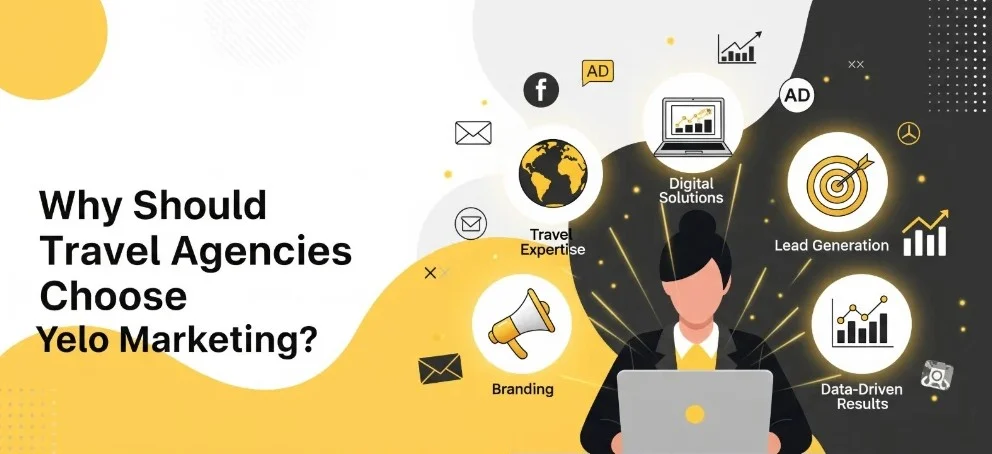
In today’s competitive travel industry, standing out online is not easy. Travel agencies need a partner who understands digital trends, customer behavior, and effective marketing strategies. This is where Yelo Marketing comes in.
Experience in Marketing in the Travel Industry
Yelo Marketing has been specializing in the development of customized approaches in travel businesses. Unlike general marketing agencies, they have an insight into the specific needs of travel agencies, e.g., promoting destination packages, raising the visibility of the websites, and customer interactions etc. Their experience guarantees the success of your marketing campaigns in their ability to target the right audience at the right time.
Full-digital marketing Services
Yelo Marketing provides complete services in SEO and social media, PPC advertising, content marketing, and email campaigns. Travel agencies do not require several partners—they have all in a single platform. Yelo also provides better visibility on the internet, presence, and client bookings by combining various tactics.
Concentrate on Specific Results
Yelo Marketing not only develops campaigns, but it also monitors and measures outcomes. Travel agencies can know which campaigns contain the most leads, clicks, and bookings with detailed analytics. This clear-cut manner results in a maximum return on the investment made by the agencies.
Developing Trust & Long-term Growth
The business of travel lives on trust. Yelo Marketing enables agencies to build credibility via reputation management, customer reviews, and engaging content. They also make agencies competitive in the digital world by working toward long-term growth, not immediate victories.
Syggested Read: How Startups in Lucknow Can Compete with Big Brands Using Digital Marketing
Ending Note
In the current digital-first era, travel agencies can no longer rely solely on conventional marketing practices. A strong web presence supported by SEO, social media, paid ads, and email campaigns is essential to stand out in a highly competitive environment.
By prioritizing customer experience and leveraging digital channels, agencies can not only maximize bookings but also build long-term customer relationships. As travel demand continues to rise, adopting effective Digital Marketing Strategies For Travel Agencies is the key to staying relevant, building trust, and ensuring travelers return to your agency for their next journey.
FAQs
How can SEO assist travel agencies in growth on the internet?
SEO assists travel agencies through ranking on search engines, enhancing visibility, attracting relevant visitors, and generating organic bookings. Keyword and content optimization also improve business credibility and long-term development.
What is the significance of social media to travel agencies?
Social media is relevant to travel agencies, as it can be used to show destinations, connect with audiences and gain their trust, and market travel packages. Destination choices are sensitive to the platforms, such as Instagram or Facebook.
Does email marketing work with B2B travel agencies?
Email marketing is beneficial to the travel agencies in nurturing leads as well as nurturing the offers, travel tips, and repeat bookings. Personalized, visually appealing mail will create good customer relationships and brand loyalty.
What are the effects of reviews of online travel agents?
Online reviews can influence travel agencies by creating trust, booking intentions, and enhancing credibility. Good reviews improve reputation, whereas prompt reaction to negative feedback improves customer experience and brand image.