
Is your business prepared to handle constantly changing compliance regulations? As organizations grow digitally and operate across multiple regions, managing standards like GDPR, HIPAA, ISO 27001, SOC 2, PCI DSS, and CCPA has become increasingly complex. Manual compliance processes often lead to wasted time, compliance gaps, and audit risks.
Compliance Management Platform helps businesses automate workflows, manage policies, assess risks, collect audit evidence, monitor regulatory updates, and centralize documentation. With features like real-time monitoring and automated reporting, these platforms help organizations stay audit-ready and improve efficiency.
To help you choose the right solution, we’ve researched and compiled the Best Compliance Management Software for Businesses, comparing their features, pricing, pros, cons, and ideal use cases.
What is Compliance Management Software?
Compliance Management Software is a digital solution that helps organizations manage legal, regulatory, and industry-specific requirements efficiently. Instead of using spreadsheets and manual records, businesses can centralize policies, compliance documents, risk assessments, audit evidence, and regulatory tasks in one platform.
It automates activities like compliance tracking, deadline management, evidence collection, reporting, and regulatory monitoring while keeping organizations audit-ready. These platforms also integrate with tools like cloud services, HR systems, and security applications for real-time compliance visibility.
Used across industries such as healthcare, finance, banking, IT, and eCommerce, compliance management solution helps reduce risks, simplify audits, improve efficiency, and ensure businesses stay aligned with changing regulations.
Why Compliance Management is More Important Than Ever
Businesses today operate in an environment of evolving regulations, advanced cyber threats, and increasing customer expectations for data protection. According to industry reports, the average cost of a data breach reached $4.88 million globally in 2024, while stricter compliance requirements continue to emerge. This makes compliance management a critical part of risk management and business continuity.
- Increasing Regulatory Requirements: Governments worldwide continue to introduce and update regulations such as GDPR, HIPAA, ISO 27001, SOC 2, PCI DSS, and CCPA. Organizations must continuously monitor these changing requirements to avoid penalties, legal issues, and reputational damage.
- Rising Cybersecurity Risks: Cyberattacks, ransomware, and data breaches are increasing every year, making cybersecurity compliance more important than ever. Compliance management software helps businesses implement security controls, monitor risks, and identify vulnerabilities before they become major incidents.
- Continuous Audit Requirements: Modern businesses can no longer prepare for audits once a year. Many certifications and regulatory frameworks now require continuous monitoring, evidence collection, and documentation to ensure organizations remain audit-ready throughout the year.
- Growing Importance of Data Privacy: Customers expect businesses to handle their personal and financial information responsibly. Compliance with privacy regulations like GDPR and HIPAA helps organizations protect sensitive data, build customer trust, and reduce the likelihood of costly data breaches.
- Cost of Non-Compliance: Failing to meet regulatory requirements can result in hefty fines, operational disruptions, legal expenses, and loss of customer confidence. Investing in compliance management solution is often far more cost-effective than dealing with the financial and reputational consequences of non-compliance.
Key Features to Look for in Compliance Management Platform
Choosing the right compliance management software goes beyond comparing prices. The best platforms combine automation, visibility, and security features that help businesses maintain compliance while reducing manual effort.
- Automated Compliance Workflows: Look for software that automates recurring compliance tasks, approvals, reminders, and policy updates. This reduces manual effort, improves efficiency, and ensures timely completion of compliance activities.
- Risk Assessment Tools: Built-in risk assessment tools help identify, evaluate, and prioritize compliance risks before they impact the business. They enable better decision-making and strengthen risk management strategies.
- Audit Management: A strong audit management feature simplifies internal and external audits by organizing evidence, tracking findings, and maintaining complete audit trails. It helps businesses stay audit-ready throughout the year.
- Policy & Document Management: A centralized system allows organizations to create, update, distribute, and securely store compliance policies, contracts, certifications, and records. It improves accessibility, collaboration, and version control.
- Evidence Collection & Reporting: Automated evidence collection gathers compliance records from integrated systems, while reporting tools generate detailed reports for auditors, executives, and regulatory authorities. This saves time and improves reporting accuracy.
- Real-Time Dashboards: Dashboards provide instant visibility into compliance status, pending tasks, risks, and audit progress, helping managers monitor performance and make faster decisions.
- Regulatory Framework Templates: Pre-built templates for standards like GDPR, HIPAA, ISO 27001, SOC 2, and PCI DSS help organizations simplify compliance implementation and follow industry best practices.
- AI-Powered Compliance Monitoring: AI capabilities monitor compliance activities, detect unusual patterns, and recommend corrective actions, helping businesses identify potential risks early.
- Third-Party Integrations & Alerts: Integration with cloud platforms, HR management systems, security tools, and other software streamlines workflows. Automated alerts keep teams informed about deadlines, policy changes, and compliance issues.
Comparison Table of Best Compliance Management Software
| Software | Best For | Starting Price | Free Trial | Deployment |
| Vanta | SaaS companies, startups, and cloud-native businesses | Custom (Starts around $7,500/year) | Demo Available | Cloud-based |
| Drata | SaaS, fintech, and technology companies | Custom Pricing | Demo Available | Cloud-based |
| Secureframe | SaaS, healthcare, and financial organizations | Custom (Starts around $9,000/year) | Demo Available | Cloud-based |
| LogicGate Risk Cloud | Large enterprises requiring customizable GRC | Custom Pricing | Demo Available | Cloud-based |
| Hyperproof | Mid-sized businesses and enterprises | Starts from $40/user/month | Demo Available | Cloud-based |
| StandardFusion | Medium to large enterprises | Starts from $99/user/month | Demo Available | Cloud-based |
| Thoropass | Startups and SaaS companies | Starts around $6,000/year | Demo Available | Cloud-based |
| ComplyAdvantage | Banks, fintech companies, and financial institutions | Custom Pricing | Demo Available | Cloud-based |
| Sprinto | SaaS startups and cloud businesses | Starts around $3,000/year | Demo Available | Cloud-based |
| 6clicks | Enterprises and compliance consultants | Starts from $20/user/month | Demo Available | Cloud-based |
| AuditBoard | Enterprises managing audits and risk | Custom Pricing | Demo Available | Cloud-based |
| MetricStream | Enterprise-wide GRC and compliance management | Custom Pricing | Demo Available | Cloud-based |
| Diligent One | Large enterprises and government organizations | Custom Pricing | Demo Available | Cloud-based |
| OneTrust | Privacy, data governance, and compliance | Custom Pricing | Demo Available | Cloud-based |
| NAVEX One | Enterprise ethics, risk, and compliance management | Custom Pricing | Demo Available | Cloud-based |
List of Best Compliance Management Software
1. Vanta
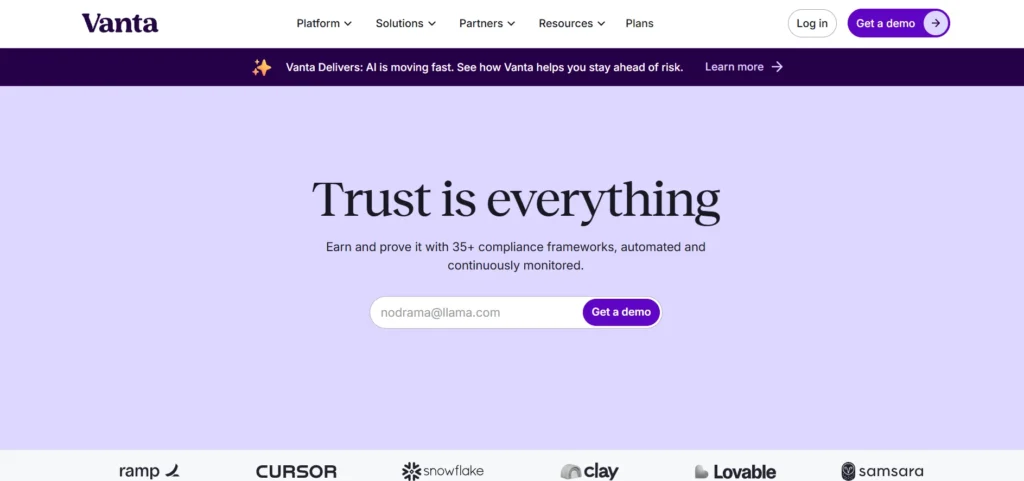
- Best For: SaaS companies, startups, and cloud-native businesses seeking automated compliance management.
Vanta is one of the leading compliance management software platforms designed to help businesses automate security and regulatory compliance. Founded in 2018, the platform simplifies achieving and maintaining certifications such as SOC 2, ISO 27001, HIPAA, PCI DSS, and GDPR. Vanta integrates with hundreds of cloud applications, continuously monitors security controls, and automatically collects audit evidence, significantly reducing manual compliance work.
Its intuitive dashboards provide real-time visibility into compliance status, enabling organizations to detect issues before audits. Trusted by thousands of startups, SaaS companies, and enterprises worldwide, Vanta enables businesses to stay audit-ready year-round while strengthening their overall security posture. Its automation capabilities save time, improve operational efficiency, and help organizations meet evolving compliance requirements with confidence.
Key Features:
- Continuous compliance monitoring
- Automated evidence collection
- Pre-built frameworks for SOC 2, ISO 27001, HIPAA, GDPR, and PCI DSS
- Real-time compliance dashboards
- 300+ third-party integrations
Pros:
- Highly automated compliance workflows
- User-friendly interface
- Excellent cloud integrations
- Reduces audit preparation time
Cons:
- Premium pricing for small businesses
- Limited customization for niche frameworks
- Initial setup may require technical expertise
- Advanced features available only in higher plans
Pricing: Custom pricing
2. Drata
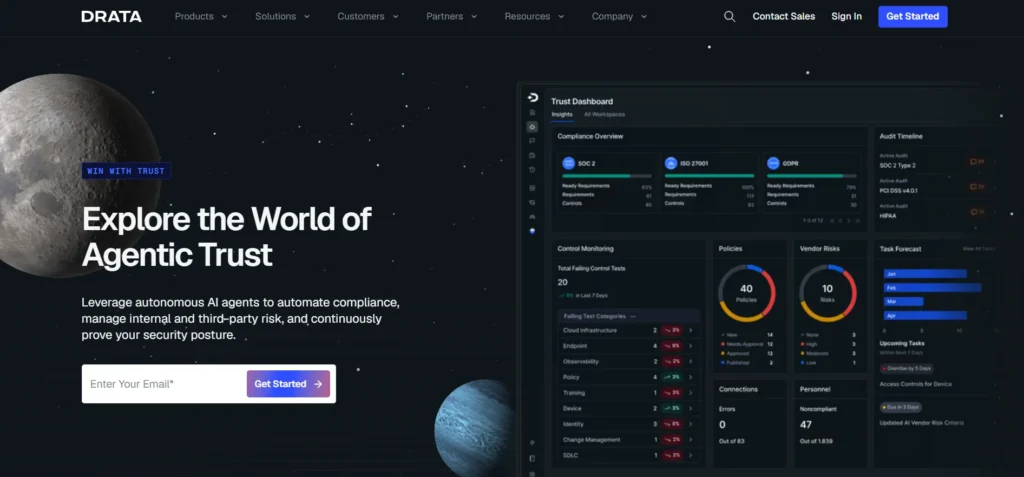
- Best For: SaaS, fintech, and fast-growing technology companies.
Drata is a modern compliance automation platform that helps organizations simplify security compliance through continuous monitoring and automated evidence collection. The platform supports leading frameworks including SOC 2, ISO 27001, HIPAA, GDPR, PCI DSS, and more. Drata integrates with over 100 cloud applications, enabling organizations to monitor controls in real time and quickly identify compliance gaps.
Its centralized dashboard provides complete visibility into audit readiness, security posture, and ongoing compliance activities. Designed primarily for SaaS, fintech, and technology companies, Drata reduces manual compliance efforts while improving collaboration between security, IT, and compliance teams. Businesses use Drata to accelerate certifications, maintain continuous compliance, and streamline audits without relying on spreadsheets or manual documentation.
Key Features:
- Continuous control monitoring
- Automated evidence collection
- Real-time compliance alerts
- 100+ cloud integrations
- Customizable compliance dashboards
Pros:
- Excellent automation capabilities
- Intuitive and modern interface
- Strong customer support
- Simplifies recurring audits
Cons:
- Custom pricing only
- May be expensive for startups
- Initial onboarding requires planning
- Some advanced reporting features require configuration
Pricing: Custom pricing
3. Secureframe

- Best For: SaaS companies, healthcare providers, and financial organizations.
Secureframe is a comprehensive compliance management platform that automates security and privacy compliance for businesses of all sizes. It supports multiple frameworks including SOC 2, ISO 27001, HIPAA, GDPR, PCI DSS, and NIST. The platform continuously monitors cloud infrastructure, employee devices, HR systems, and security controls while automatically collecting audit evidence.
Secureframe also includes vendor risk management, policy management, employee security training, and real-time reporting within a centralized dashboard. With more than 200 integrations, it enables organizations to manage compliance efficiently across multiple departments. Secureframe is particularly popular among SaaS companies, healthcare organizations, and financial institutions looking to simplify certification processes while strengthening their overall security and compliance programs.
Key Features:
- Automated compliance monitoring
- Risk and policy management
- Audit-ready evidence collection
- Vendor risk management
- 200+ third-party integrations
Pros:
- Supports multiple compliance frameworks
- Comprehensive automation features
- Strong integration ecosystem
- Easy-to-use dashboards
Cons:
- Higher annual pricing
- Some features require technical setup
- Limited offline functionality
- Best suited for cloud-based businesses
Pricing: Custom pricing
4. LogicGate Risk Cloud

- Best For: Large enterprises requiring customizable GRC and compliance solutions.
LogicGate Risk Cloud is a flexible Governance, Risk, and Compliance (GRC) platform that helps organizations automate compliance processes and manage enterprise risk from a single system. Its no-code platform allows businesses to build customized workflows for audits, policy management, risk assessments, vendor management, and regulatory reporting.
LogicGate provides powerful dashboards, workflow automation, and analytics that improve decision-making and compliance visibility across departments. The platform supports numerous regulatory standards and adapts to changing business requirements without extensive development work. Large enterprises, financial institutions, healthcare organizations, and government agencies rely on LogicGate Risk Cloud to streamline governance, reduce compliance risks, and create scalable compliance programs tailored to their operational needs.
Key Features:
- No-code workflow automation
- Enterprise risk management
- Audit and policy management
- Real-time dashboards
- Regulatory reporting tools
Pros:
- Highly customizable platform
- Strong workflow automation
- Comprehensive GRC capabilities
- Excellent reporting tools
Cons:
- Learning curve for new users
- Custom pricing
- Longer implementation time
- Better suited for medium to large organizations
Pricing: Custom pricing
5. Hyperproof

- Best For: Mid-sized businesses and enterprises managing multiple compliance frameworks.
Hyperproof is a compliance operations platform that enables organizations to automate evidence collection, manage risk, and simplify audit readiness across multiple compliance frameworks. Supporting standards such as SOC 2, ISO 27001, HIPAA, GDPR, NIST, and PCI DSS, Hyperproof helps businesses centralize compliance activities while reducing manual work.
The platform offers continuous monitoring, task management, policy tracking, and customizable dashboards that provide complete visibility into compliance progress. Its extensive API integrations allow organizations to collect evidence automatically from cloud applications and security tools. Hyperproof is widely adopted by mid-sized businesses and enterprises seeking a collaborative compliance solution that improves efficiency, strengthens governance, and ensures continuous audit readiness.
Key Features:
- Automated evidence collection
- Continuous compliance monitoring
- Framework mapping
- Risk management dashboards
- Task and remediation tracking
Pros:
- Strong automation capabilities
- Easy collaboration across teams
- Detailed audit reporting
- Extensive API integrations
Cons:
- Per-user pricing can become expensive
- Advanced features require onboarding
- Smaller businesses may find it feature-heavy
- Limited customization in lower plans
Pricing: Starts from $12,000 per year
6. Thoropass
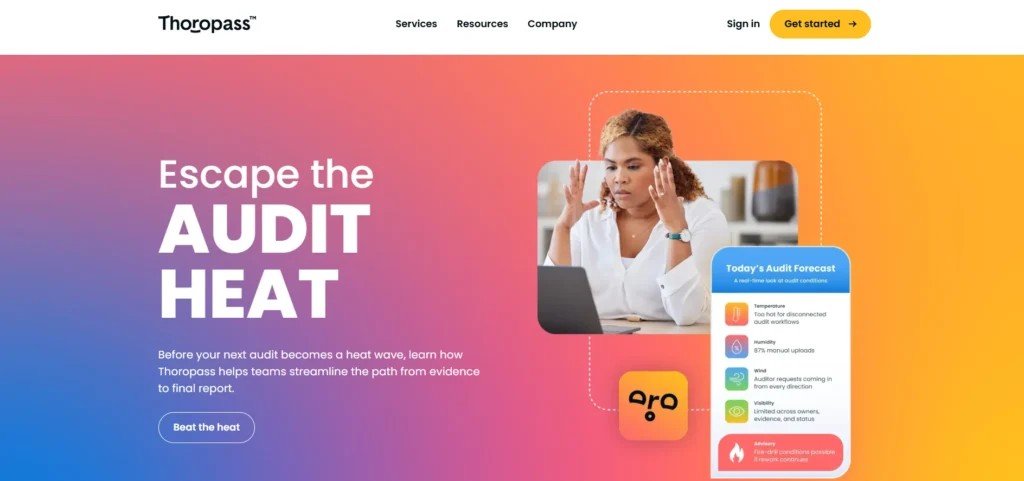
- Best For: Startups and SaaS companies preparing for SOC 2, ISO 27001, or HIPAA certification.
Thoropass, formerly known as Laika, is a compliance automation platform built to help startups and growing businesses achieve certifications like SOC 2, ISO 27001, HIPAA, and PCI DSS more efficiently. The platform combines automation, continuous monitoring, audit preparation, and expert compliance guidance within a single solution.
Thoropass automatically collects evidence, tracks compliance controls, and provides businesses with a centralized dashboard to manage compliance activities. Its team of compliance experts also assists organizations throughout the certification process, making it an excellent choice for companies completing their first security audit. By reducing manual work and simplifying documentation, Thoropass helps organizations achieve compliance faster while maintaining continuous regulatory readiness.
Key Features:
- Automated audit preparation
- Continuous compliance monitoring
- Built-in compliance templates
- Expert audit guidance
- Evidence collection automation
Pros:
- Fast certification process
- Excellent customer support
- User-friendly platform
- Strong automation capabilities
Cons:
- Limited customization options
- Fewer integrations than some competitors
- Better suited for startups than enterprises
- Custom workflows are somewhat limited
Pricing: Starts around $14,500 per year
7. ComplyAdvantage

- Best For: Banks, fintech companies, payment providers, and financial institutions.
ComplyAdvantage is an AI-powered compliance platform specializing in Anti-Money Laundering (AML), Know Your Customer (KYC), fraud prevention, and sanctions screening. Financial institutions, banks, fintech companies, and payment providers use the platform to detect suspicious activities and comply with global financial regulations.
ComplyAdvantage continuously monitors transactions, customer profiles, and sanctions lists using artificial intelligence and machine learning to identify financial crime risks in real time. The platform offers advanced risk scoring, regulatory reporting, and seamless API integrations with banking systems. By automating compliance processes and improving detection accuracy, ComplyAdvantage helps organizations reduce operational risks while meeting evolving AML and financial compliance requirements.
Key Features:
- AI-powered AML monitoring
- Customer risk scoring
- Sanctions and watchlist screening
- Real-time transaction monitoring
- API integrations with financial systems
Pros:
- Excellent AI-powered analytics
- Accurate fraud detection
- Scalable enterprise solution
- Strong regulatory coverage
Cons:
- Primarily focused on financial compliance
- Enterprise pricing only
- Technical implementation required
- Advanced features require training
Pricing: From $99per month
8. Sprinto
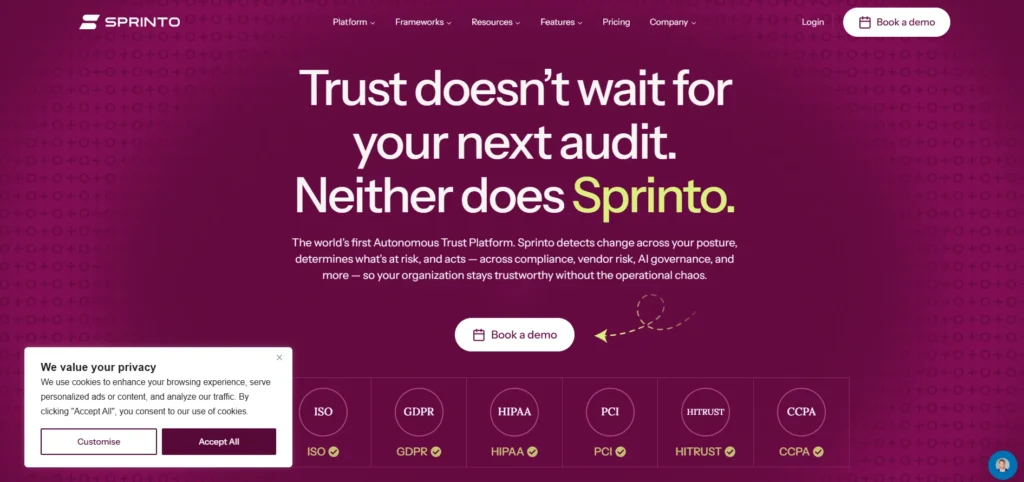
- Best For: SaaS startups and cloud-based businesses seeking compliance automation.
Sprinto is a cloud-native compliance automation platform that helps startups and SaaS businesses simplify compliance with frameworks such as SOC 2, ISO 27001, GDPR, HIPAA, and PCI DSS. The platform continuously monitors cloud infrastructure, automatically collects audit evidence, and identifies compliance gaps before they become critical issues.
Sprinto integrates with popular cloud services, HR platforms, identity providers, and development tools, enabling organizations to manage compliance without disrupting existing workflows. Its intuitive dashboards, automated workflows, and pre-built templates reduce manual effort while accelerating audit preparation. Sprinto is particularly popular among rapidly growing technology companies that need an affordable and scalable solution for maintaining continuous compliance.
Key Features:
- Continuous compliance monitoring
- Automated evidence collection
- Pre-built compliance frameworks
- Cloud integrations
- Real-time dashboards
Pros:
- Quick implementation
- Affordable compared to many competitors
- Excellent automation features
- Easy-to-use interface
Cons:
- Limited enterprise customization
- Primarily focused on SaaS businesses
- Custom framework support is limited
- Advanced reporting features could be stronger
Pricing: Custom pricing
9. 6clicks

- Best For: Enterprises, consultants, and organizations managing multiple compliance frameworks.
6clicks is a modern Governance, Risk, and Compliance (GRC) platform that helps organizations simplify risk assessments, compliance management, and audit processes using automation and artificial intelligence. The platform features its proprietary AI engine, Hailey AI, which assists businesses with policy mapping, framework alignment, and risk analysis.
Its modular architecture allows organizations to customize the platform according to their compliance needs, making it suitable for consulting firms, enterprises, and regulated industries. 6clicks supports multiple compliance frameworks while offering centralized dashboards, workflow automation, reporting, and collaboration features. Businesses use the platform to improve governance, reduce compliance complexity, and scale compliance programs more efficiently.
Key Features:
- AI-powered compliance mapping
- Integrated risk assessment tools
- Automated audit workflows
- Compliance performance dashboards
- Modular GRC architecture
Pros:
- Innovative AI capabilities
- Flexible and scalable platform
- Strong risk management tools
- Supports multiple compliance frameworks
Cons:
- Initial setup can be complex
- Learning curve for new users
- Smaller businesses may not need all features
- Advanced customization requires training
Pricing: 6clicks offers flexible, all-inclusive pricing tailored.
10. MetricStream
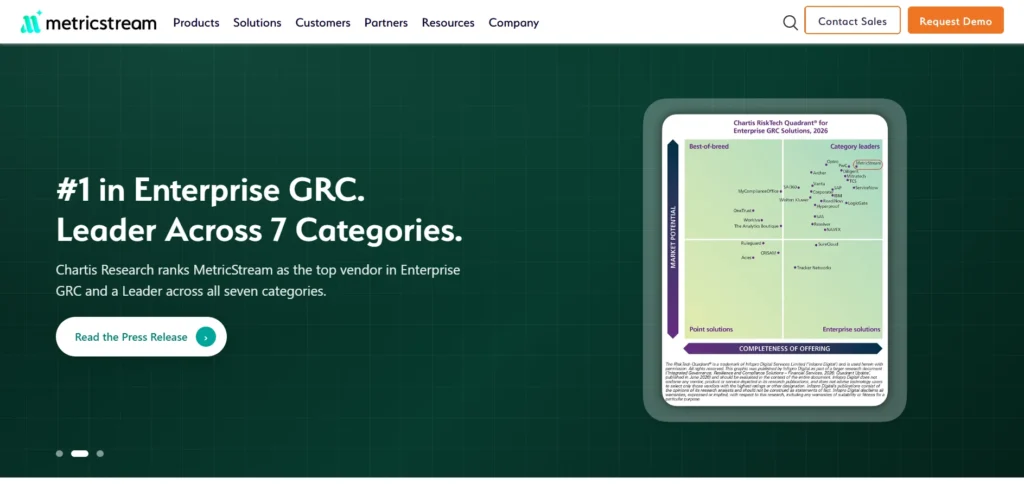
- Best For: Large enterprises requiring enterprise-wide GRC and risk management.
MetricStream is an enterprise-grade Governance, Risk, and Compliance (GRC) platform that enables organizations to manage compliance, operational risks, internal audits, vendor risks, and cybersecurity within a unified system. The platform supports global regulatory frameworks including ISO standards, SOX, GDPR, HIPAA, PCI DSS, and many industry-specific regulations.
MetricStream provides AI-driven insights, predictive analytics, automated workflows, and configurable dashboards that help organizations proactively identify compliance gaps and mitigate business risks. Its scalable architecture makes it suitable for multinational enterprises operating across multiple jurisdictions. By centralizing governance and compliance activities, MetricStream improves decision-making, strengthens risk visibility, and enhances regulatory compliance across the organization.
Key Features:
- Enterprise risk management
- Regulatory compliance automation
- Internal audit management
- AI-powered analytics
- Vendor and third-party risk management
Pros:
- Highly scalable platform
- Extensive GRC capabilities
- Powerful analytics and reporting
- Supports global regulatory frameworks
Cons:
- Expensive for smaller organizations
- Complex implementation process
- Requires user training
- Advanced customization may need technical support
Pricing: Custom pricing
Benefits of Using Compliance Management Software
As regulatory requirements become more complex, businesses need smarter ways to manage compliance efficiently. Compliance management Tool not only reduces manual effort but also helps organizations stay secure, organized, and audit-ready throughout the year.
- Automates Compliance Tasks: Compliance management software automates repetitive tasks such as assigning responsibilities, tracking deadlines, collecting evidence, generating reports, and monitoring regulatory changes. This saves valuable time and allows compliance teams to focus on strategic initiatives instead of routine administrative work.
- Reduces Human Errors: Manual compliance processes often lead to missed deadlines, inaccurate documentation, and reporting mistakes. By automating workflows and maintaining standardized processes, compliance software minimizes human errors and improves the accuracy of compliance records.
- Simplifies Internal & External Audits: Preparing for audits becomes much easier with centralized documentation, automated evidence collection, and real-time reporting. Compliance software enables businesses to quickly provide auditors with the required information, reducing audit preparation time and ensuring smoother audit processes.
- Improves Risk Management: The software continuously monitors compliance activities, identifies potential risks, and alerts teams before issues escalate. This proactive approach helps organizations mitigate regulatory, operational, and cybersecurity risks while strengthening overall governance.
- Centralizes Compliance Documentation: Instead of storing policies, reports, contracts, and audit evidence across multiple systems, compliance management software keeps everything in one secure platform. This improves document accessibility, version control, collaboration, and overall compliance visibility across departments.
- Ensures Continuous Monitoring: Modern compliance platforms provide real-time monitoring of controls, policies, and regulatory requirements rather than relying on periodic reviews. Continuous monitoring helps businesses detect compliance gaps early, respond faster to changing regulations, and remain audit-ready at all times.
Who Should Use Compliance Management Software?
Compliance management solution is valuable for organizations of all sizes that need to meet regulatory requirements, reduce risks, and streamline compliance processes. Here are the industries that benefit the most:
- SaaS Companies: SaaS businesses use compliance software to achieve certifications like SOC 2, ISO 27001, GDPR, and PCI DSS while automating security controls, evidence collection, and audit preparation.
- Financial Institutions: Banks, fintech companies, and insurance providers rely on compliance software to manage AML, KYC, fraud prevention, risk management, and financial regulations, ensuring secure and compliant operations.
- Healthcare Organizations: Hospitals, clinics, and healthcare providers use compliance platforms to protect patient data, maintain HIPAA compliance, and securely manage medical records and regulatory documentation.
- Manufacturing Companies: Manufacturers leverage compliance software to meet quality, environmental, workplace safety, and industry-specific regulations, helping reduce operational risks and maintain regulatory compliance.
- Government & Educational Institutions: Government agencies and educational organizations use compliance management software to safeguard sensitive information, maintain regulatory standards, manage audits, and ensure policy compliance across departments.
- E-commerce Businesses: Online retailers use compliance software to comply with PCI DSS, GDPR, consumer privacy laws, and cybersecurity standards, helping protect customer data, secure online transactions, and build customer trust.
How to Choose The Best Compliance Management Software
Choosing the right compliance management software is not just about features; it is about finding a solution that matches your business needs, industry regulations, and future growth. Follow these steps to make an informed decision.
- Identify Your Compliance Requirements: Understand your business’s compliance needs based on industry, location, and data handling requirements. This helps you choose software with the right features and avoid unnecessary costs.
- Check Supported Regulatory Frameworks: Ensure the platform supports required standards like GDPR, HIPAA, PCI DSS, SOC 2, ISO 27001, and other industry-specific regulations to simplify compliance management.
- Evaluate Automation Features: Look for automation capabilities like evidence collection, workflow management, policy updates, reminders, and continuous monitoring to reduce manual work and improve efficiency.
- Review Reporting & Dashboards: Choose software with real-time dashboards and customizable reports that provide visibility into compliance status, risks, tasks, and audit progress.
- Check Integration Capabilities: The software should integrate with existing tools like cloud platforms, HR systems, security applications, and project management tools to streamline workflows.
- Compare Pricing & Value: Evaluate pricing based on features, scalability, and long-term value. Choose a solution that meets your requirements rather than focusing only on the lowest cost.
- Read Reviews & Test Before Buying: Check customer reviews on trusted platforms and use free trials or demos to evaluate usability, features, and overall fit for your organization.
- Consider Future Scalability: Select software that can grow with your business by supporting more users, advanced automation, additional frameworks, and evolving compliance requirements.
Common Compliance Challenges Businesses Face
No matter the size of your organization, managing compliance comes with its own set of challenges. Understanding these common obstacles can help you choose the right strategies and software to stay compliant while reducing operational risks.
- Managing Multiple Regulations: If your business operates across different industries or countries, keeping up with regulations like GDPR, HIPAA, SOC 2, and ISO 27001 can quickly become overwhelming. A centralized compliance system makes it much easier to manage multiple requirements from one place.
- Manual Documentation: Relying on spreadsheets, emails, and paper records often leads to missing documents, duplicate work, and costly mistakes. Automating documentation helps keep compliance records organized, accurate, and readily available whenever they’re needed.
- Lack of Visibility: Without a centralized dashboard, it’s difficult to know which compliance tasks are complete, pending, or overdue. Real-time visibility allows your team to identify issues early and take action before they become major compliance risks.
- Audit Preparation: Preparing for internal or external audits can be stressful when evidence and documentation are scattered across multiple systems. Compliance software simplifies the process by organizing everything in one place, making audits faster and far less time-consuming.
- Employee Compliance Training: Even the best compliance policies won’t be effective if employees aren’t aware of them. Regular compliance training ensures your workforce understands company policies, regulatory requirements, and their role in maintaining compliance.
Future Trends in Compliance Management Platform
The future of compliance management software focuses on making compliance smarter, faster, and more proactive. AI is becoming a key feature, helping businesses automate evidence collection, classify documents, detect compliance gaps, and recommend corrective actions with minimal manual effort. Continuous compliance monitoring is replacing periodic reviews by tracking controls and regulatory requirements in real time, helping organizations identify risks early. Predictive risk analytics, ESG compliance management, cloud-native platforms, and no-code compliance workflows are also gaining importance. These innovations help businesses reduce compliance costs, improve efficiency, strengthen security, and stay prepared for evolving regulatory requirements.
Conclusion
Choosing the right Compliance Management Software is essential for organizations that want to simplify regulatory compliance, reduce operational risks, and stay audit-ready in today’s rapidly changing business environment. Modern compliance platforms automate repetitive tasks such as policy management, evidence collection, risk assessments, and compliance monitoring, allowing teams to focus on strategic initiatives instead of manual paperwork.
They also improve visibility, strengthen security, and help businesses comply with regulations like GDPR, HIPAA, SOC 2, ISO 27001, and PCI DSS more efficiently. Before making your final decision, compare each platform’s features, pricing, integrations, scalability, customer support, and supported compliance frameworks. Investing in the right solution today will not only streamline your compliance processes but also protect your business from costly penalties, strengthen customer trust, and support long-term business growth.
FAQs
1. What Is Compliance Management Tool?
Compliance management software helps businesses automate, monitor, and manage regulatory compliance, audits, policies, and risk assessments.
2. Who Should Use Compliance Management Solution?
Organizations in industries like healthcare, finance, SaaS, manufacturing, government, education, and eCommerce can benefit from compliance management software.
3. How Much Does Compliance Management Software Cost?
Pricing varies by provider, typically ranging from $20 per user/month to custom enterprise pricing based on business requirements.
4. Can Small Businesses Use Compliance Management Tool?
Yes, many vendors offer affordable and scalable solutions specifically designed for startups and small businesses.
5. What Is The Difference Between GRC Software And Compliance Management Platform?
GRC software covers governance, risk, and compliance, while compliance management platform primarily focuses on meeting regulatory requirements and simplifying audits.