
In real estate, success isn’t about waiting; it’s about executing lead generation for real estate the right way, every single time. Whether you’re an agent, broker, or developer, one thing is clear: no leads mean no deals. In fact, 63% of real estate agents consider lead generation their biggest challenge, underscoring how essential a strong strategy really is.
With over 90% of home buyers starting their property search online and nearly 75% contacting only one agent, the competition has never been more intense. This makes mastering lead generation for real estate more critical than ever. Traditional methods alone—like word-of-mouth referrals or print ads—are no longer enough. Today, successful strategies involve a mix of online ads, paid placements, referrals, and local branding, all tailored to reach the right prospects efficiently.
As a digital marketing agency with extensive experience working with real estate businesses, we’ve seen firsthand what works and what doesn’t. This Ultimate Guide to Real Estate Lead Generation is designed to provide proven, practical, and scalable techniques to attract serious buyers and sellers, build trust, and convert interest into closed transactions—all without wasting time or budget.
What is Real Estate Lead Generation
Real estate lead generation is the process of attracting and capturing potential buyers and sellers who are interested in property transactions. It involves using strategic marketing methods such as digital advertising, social media, SEO, and targeted campaigns to generate high-quality leads. An effective real estate lead generation strategy not only increases visibility but also helps build trust, nurture prospects, and convert them into long-term clients, ensuring consistent business growth.
Why Lead Generation is Crucial for Real Estate Business Growth
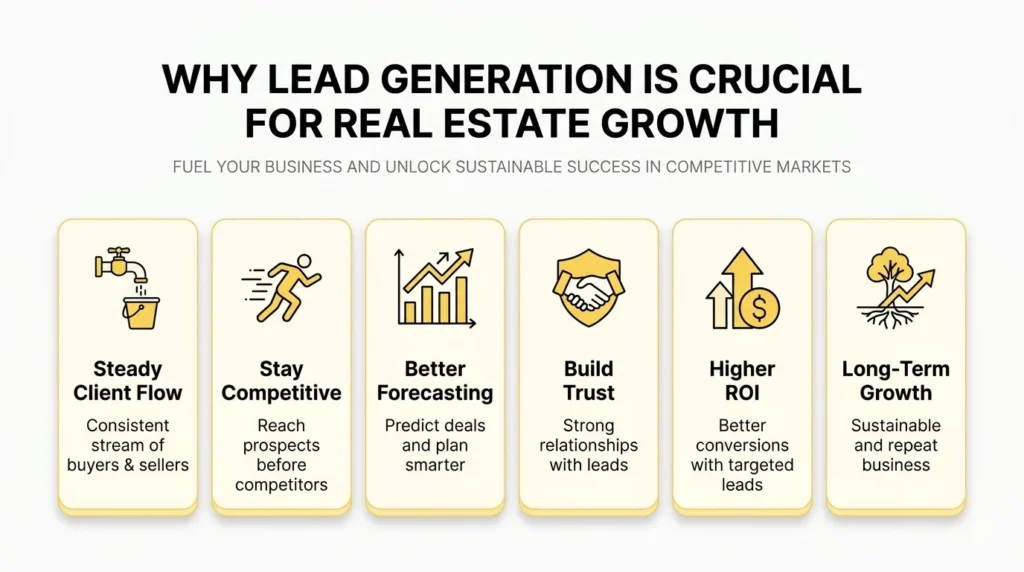
Lead generation is essential for steady growth in real estate, helping you attract the right buyers and sellers while staying ahead in a competitive market—here are some points that explain why lead generation is crucial for real estate business growth.
Provides a steady clientele: The successful real estate business is based on lead generation. A constant supply of leads keeps you piping with potential buyers and sellers all the time, and you are not dependent on the season or referrals only.
Helps You Stay Competitive: The real estate market is increasingly saturated, making it harder to stand out. However, a strategic approach to lead generation can set you apart—boosting your visibility, positioning your brand effectively, and helping you connect with potential buyers before your competitors, especially in high-demand markets.
Enhances Sales Forecastability: Having a developed system of lead generation, it is possible to predict deals more precisely. This predictability enables improved planning, setting goals, and stability of revenue in the long term.
Develops Faith and Brand Loyalty: High-frequency interaction in terms of content, follow-ups, and value-based communication makes you a trustworthy professional. The more trusted you are, the higher the chance that you will be picked over others by the leads.
Maximizes Marketing ROI: The targeted lead generation concentrates your energy on individuals who are interested in selling or buying. This saves on unnecessary expenditure and increases the conversion rates.
Supports Long-Term Growth: Lead generation is not about instant deals but creating relationships. An excellent lead pipeline in the current will mean perpetual growth and recurrence in the future.
Real Estate Market Growth & Digital Opportunity
The worldwide real estate industry is expected to rise steadily from 2026 to 2034, owing to rising demand, urbanization, and greater investment activity (IMARC, Statista). As the market increases, so does competition among real estate companies across areas and property types.
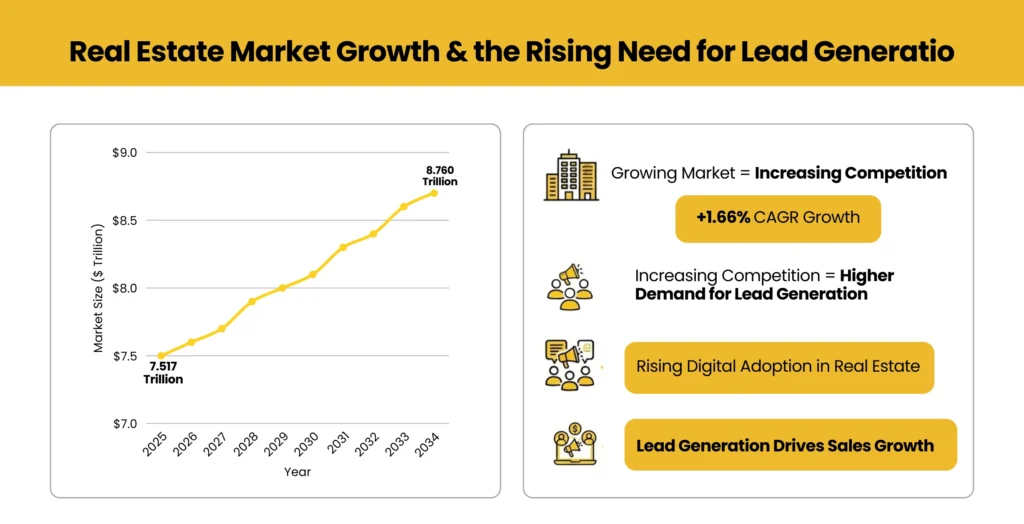
This growth is closely related to digital behavior; currently, the majority of purchasers begin their property searches online. This makes digital marketing and lead creation critical for real estate firms looking to catch attention, produce quality leads, and stay ahead in an increasingly competitive industry.
Key Components of Real Estate Lead Generation
A successful real estate lead generation strategy is built on a few essential components that work together to attract, capture, and convert potential clients. Focusing on these key elements helps you generate high-quality leads, improve conversions, and grow your business consistently.
1. Target Audience Identification: Understanding your ideal buyers and sellers is the foundation of real estate lead generation. By defining factors like location, budget, property type, and intent, you can attract high-quality leads that are more likely to convert.
2. Strong Online Presence & Local SEO: A professional website combined with local SEO optimization (including Google Business Profile) helps your real estate business appear in search results. This increases visibility and drives organic traffic from people actively looking for properties.
3. High-Converting Lead Capture System: Effective lead generation requires optimized landing pages, contact forms, and clear call-to-actions (CTAs). These tools help capture visitor information and turn website traffic into qualified real estate leads.
4. Content Marketing Strategy: Creating valuable content like blogs, property guides, market trends, and videos builds trust and authority. It also improves SEO rankings and attracts potential buyers and sellers organically.
5. Lead Nurturing & Follow-Up: Consistent follow-ups through email, calls, or messages are crucial for converting leads into clients. A well-planned nurturing strategy keeps prospects engaged and increases conversion rates.
6. CRM & Performance Tracking: Using a CRM system helps manage and organize leads efficiently. Tracking key metrics like conversion rates and lead sources allows you to refine your strategy and improve overall lead generation performance.
Is Free Lead Generation Effective in Real Estate in 2026?
Yes, free lead generation is effective in the real estate business, but only when it is strategic, consistent, and followed up. In 2026, 22.7% of agents’ referrals use the social media platform and networking as free sources, and networking has the highest ROI of more than 40% of the surveyed agents.
Inbound inquiries can be created in cost-free ways: Google Business Profile optimization, organic SEO, email newsletters, open houses, and establishing your sphere of influence. Free leads can take longer and involve more manual work and can vary in number based on paid advertising.
Free lead generation in combination with a robust CRM and follow-up measures is a feasible means of creating a sustainable pipeline in 2026, particularly among local and referral-based companies.
List of Best Strategies for Effective Lead Generation for Real Estate
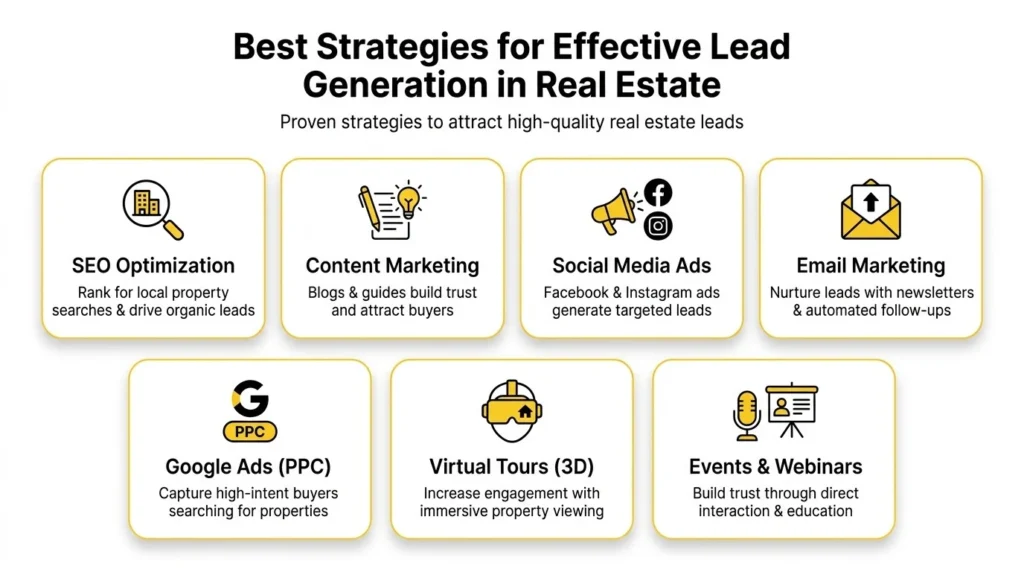
1. SEO Optimization of Real Estate Websites
SEO enables your site to appear when buyers are searching the online property listings. Local SEO is essential, with more than 90% of home buyers beginning their search on search engines.
Use geographical keywords such as “homes on sale in [city],” optimize meta titles and headings, and write local market blogs. SEO properly done can help gain organic traffic 2-3 times in 6 months, providing consistent, high-intent leads with no continuing ad expenditures.
2. Social Media Marketing and Blogging
Content marketing is useful in order to attract and educate potential buyers and sellers in an organic manner. Blogging real estate companies achieve 55% higher amounts of visitors to their websites than those that do not.
Market updates and investment guides, buying tips, and frequently asked questions all create a sense of trust and position you as an expert. Quality content will answer the questions of buyers in advance, which have warmer leads more likely to convert over time.
3. Social Media Marketing (Facebook Lead Generation Ads)
Facebook, Instagram, and LinkedIn are the best platforms to use to generate leads in the real estate business since the place is visualized.
More than 70 % of real estate agents rely on social media to make leads. Advertisements and walkthrough videos, testimonials, and interactive stories will facilitate greater engagement and reduce qualified leads.
4. Email Marketing Campaigns
Email marketing is among the least expensive real estate mediums, with a potential ROI of up to 4,300%. The personalized listings, weekly newsletters, and market updates ensure the leads remain active even during long buying cycles.
Automated follow-ups enhance the reply rates by almost half, guaranteeing the consistency of communication. Email is also effective in cold lead nurturing to prepare a cold lead to sell or buy.
5. Google Ads and PPC Campaigns
The Google Ads will work well to attract high-intent buyers who are actively searching for property. Such keywords as buy property in [city] appeal to the users who are willing to act.
Leads made with PPC convert 30-40% faster than organic leads. Retargeting advertisements also enhance conversion since your brand remains with former visitors of the website.
6. Virtual Tours and 3D Property Viewing
Virtual tours enable buyers to view properties in remote locations without any doubt. The most viewed listings are those that have 3D or virtual tour listings, which get up to 87% more views compared to normal listings.
These tours appeal to serious and qualified buyers and result in few unnecessary visits to the site. They are particularly useful with out-of-city or international clients who would want to shortlist properties and only book a real-life visit.
7. Networking Events and Webinars
Networking is strong even though there is digital growth. The level of trust of the prospects in agents that host local events and webinars increases by 45%. Informed leads are drawn to educational webinars about investment strategies or market trends, and open houses or property expos enable direct contact.
These personal interactions or live interactions generate credibility more quickly and assist in turning warm leads into clients more efficiently.
Major Metrics to Monitor the Success of Real Estate Lead Generation
Tracking the right metrics is essential to understand how effective your real estate lead generation efforts are. By monitoring key performance indicators, you can identify what’s working, optimize your strategy, and improve overall results—here are the major metrics to measure success.
- Lead Conversion Rate: This measure is used to determine the proportion of leads to the clients. An increase in the conversion rate will mean high targeting, follow-ups, and optimization of the sales process.
- Cost per Lead (CPL): Cost per Lead is used in determining how much you pay per lead. CPL will allow you to know which channels provide quality leads at the lowest cost and spend your budget more effectively.
- Return on Ad Spend (ROAS): ROAS can assist you in analyzing the profitability of your advertisement campaign. It measures the amount of revenue earned in ads against the amount spent so that the marketing effort is doing real business value.
- Engagement Rate: Acting indicators like likes, comments, shares, and clicks will show the effectiveness of your content to your audience. Increased interaction can result in an improvement of the quality of leads and enhancement of brand recall.
Real Estate Lead Generation Keywords (With Examples)
1. High-Intent Buyer Keywords (Google Search)
These keywords attract users who are ready to buy.
Examples:
- Buy a flat in Gurgaon
- 2 BHK apartment in Noida
- luxury apartments in Bangalore
- ready to move flats near me
- new residential projects in Pune
- Best for: Google Ads & landing pages
- Result: Higher conversion, slightly higher CPL
2. Seller & Owner Keywords
These keywords attract property owners planning to sell.
Examples:
- sell my house in Delhi
- Property valuation in Mumbai
- best real estate agent near me
- How to sell a flat fast
- Best for: Lead forms & valuation offers
- Result: High-quality seller leads
Ending Note
Generating leads in real estate is not about pursuing each inquiry but creating a machine that captures, fosters, and transforms the right leads every time. When properly done, it brings a sense of predictability to an otherwise unpredictable market.
You integrate both online (SEO, paid advertising, social media, etc.) and offline (referrals and visits to the site) efforts to form a potent multi-channel engine. Timely follow-ups, automation, and value-based communication transform your leads into long-term relationships.
Also, keep in mind that the winning agents are not necessarily the best closers, but the ones who are present when the buyers and sellers are. Build trust initially and deliver value continuously, and the deals will ensue.
FAQs
1. What is the Duration of the Real Estate Lead Generation Strategies?
Paid campaigns can be immediately led, whereas SEO and content marketing tend to provide continual and quality outputs after three to six months.
2. What is the Best Source of Lead in Terms of ROI in Real Estate Marketing?
Google Search ads, where the intent is high and referred leads normally present high ROI since the buyer is more likely to be ready to purchase.
3. Why do Most Real Estate Leads Not Translate Into Real Clients?
The most frequent conversion blockers are delayed follow-ups, weak lead nurturing, generic communication, and the absence of trust-building.
4. What can Agents do to Improve the Quality of Leads Without Raising the Marketing Budget?
Better targeting, landing pages, value-based lead magnets, and automated follow-ups can substantially increase the quality of leads.
5. Does Automation Work in Generating Leads in Real Estate Without Compromising Personalization?
Yes, intelligent CRM automation and custom messaging will improve response time without losing a human communication strategy.